Oversight Structures Influencing Progressive Jackpot Designs in Austria's Licensed Spielautomaten Sector
Hugo Carter · Oct 7, 2026
Oversight Structures Influencing Progressive Jackpot Designs in Austria's Licensed Spielautomaten Sector
Regulatory frameworks in Austria shape how progressive jackpot systems operate within licensed Spielautomaten through a combination of licensing requirements and ongoing compliance checks that operators must follow at every stage of game deployment and revenue collection. These mechanisms focus on fairness verification, contribution rate limits, and payout transparency that directly determine how jackpots accumulate and distribute across approved platforms.
Key Regulatory Bodies and Their Roles
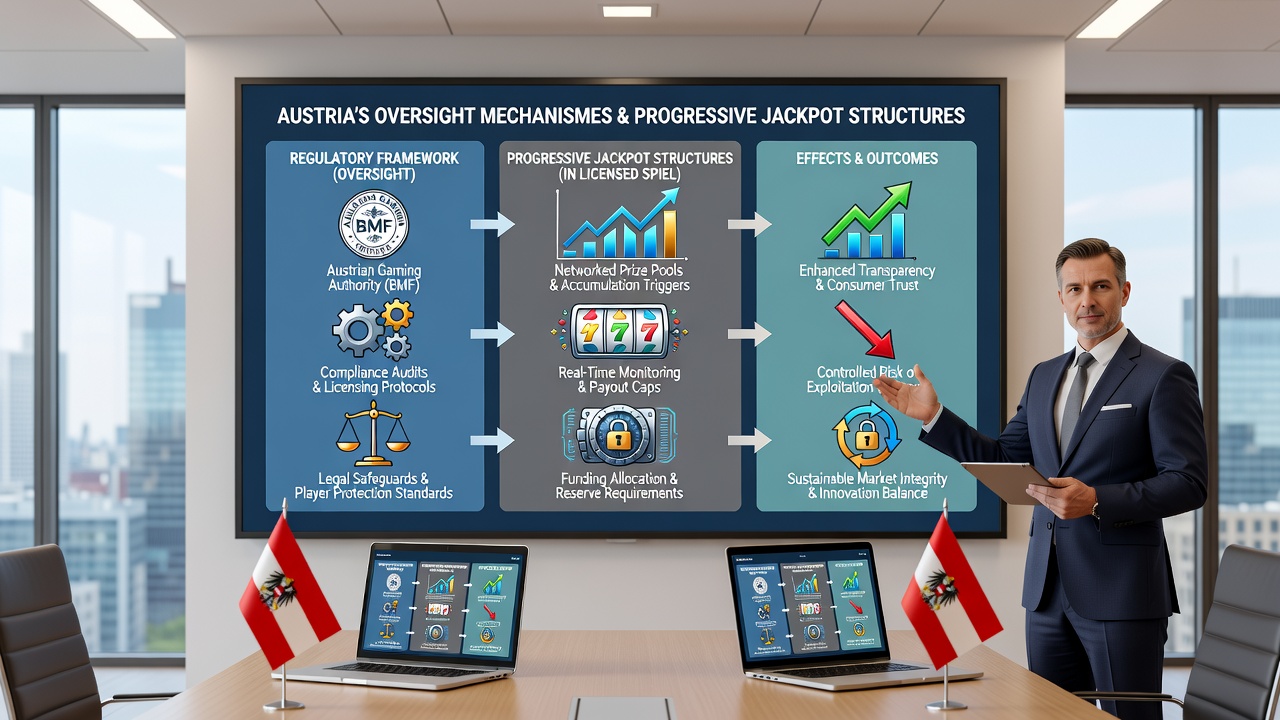
The Federal Ministry of Finance holds primary authority over gambling licensing in Austria while the Austrian Gaming Authority conducts technical audits and monitors jackpot mechanics in real time to ensure all progressive systems meet statutory standards. Licensed operators submit detailed reports on jackpot seed values and contribution percentages that regulators review during quarterly inspections and these reviews often lead to adjustments when accumulation rates exceed permitted thresholds. Data from the ministry shows that licensed platforms must maintain separate escrow accounts for jackpot reserves and this requirement prevents operators from diverting funds during high-volume periods.
Technical Standards for Progressive Systems
Spielautomaten with progressive features undergo mandatory certification by approved testing laboratories before they reach the market and these labs examine random number generators along with jackpot trigger algorithms to confirm that every spin carries the advertised probability of winning the top prize. Operators must configure contribution rates so that a fixed percentage of each wager feeds the jackpot pool yet Austrian rules cap the maximum contribution at levels that keep overall return-to-player ratios within legal bounds. When multiple machines link to a single progressive meter the system records each contribution with timestamps that regulators can audit to verify that no unauthorized pooling occurs across unlicensed sites.
Effects on Jackpot Structure and Player Experience
Because contribution caps and reserve requirements limit how quickly jackpots grow operators tend to structure progressive tiers with smaller intermediate prizes that reset more frequently while the main jackpot accumulates at a slower but steady pace. This structure results in more frequent smaller payouts that keep player engagement stable and data collected through 2025 indicates that platforms following these guidelines experience lower volatility in jackpot hit rates compared with less regulated markets. Observers note that licensed Spielautomaten display current jackpot amounts in real time with mandatory disclaimers about the theoretical payout frequency and these disclosures help maintain transparency without altering the underlying mathematics of the game.
One study conducted by an independent European research institute found that Austrian oversight correlates with fewer disputes over jackpot eligibility because every winning spin undergoes automated verification against the certified random number sequence before funds release. Players who participate on licensed platforms therefore encounter standardized claim procedures that operators must complete within defined timeframes and failure to meet these deadlines triggers automatic regulatory review.
Developments Observed Through October 2026
Updates issued in October 2026 introduced enhanced reporting protocols that require operators to submit real-time jackpot balance feeds directly to the gaming authority's monitoring portal and this change allows regulators to detect anomalies such as sudden contribution spikes or unexplained meter resets within minutes rather than weeks. Licensed platforms responded by integrating new API connections that transmit seed values and contribution logs automatically while maintaining backward compatibility with existing game servers. Figures released by the ministry at that time revealed that progressive jackpot pools on approved Spielautomaten reached an aggregate value exceeding 45 million euros during the preceding quarter yet no single meter exceeded the newly established upper threshold of 12 million euros per title.
Industry associations across the EU have referenced Austria's approach when discussing cross-border standards and one Australian regulatory body published comparative notes highlighting how Austria's escrow and audit requirements differ from its own licensing model. These comparisons appear in technical papers that operators use when planning multi-jurisdictional expansions yet each market retains distinct contribution rules that affect jackpot growth curves.
Conclusion
Austria's oversight mechanisms continue to define the boundaries within which progressive jackpot structures evolve for licensed Spielautomaten by enforcing technical certification, contribution limits, and transparent reporting that together maintain system integrity across all approved platforms. Recent protocol enhancements implemented through October 2026 further strengthen real-time visibility into jackpot activity and these measures ensure that accumulation and distribution processes remain consistent with statutory requirements. Operators who adhere to these frameworks report stable operational conditions while regulators gain improved tools for ongoing verification.