Certification Standards and Regulatory Influences on Slot Games in Austria's Online Sector
Zara Vogel · Sep 23, 2026

Certification Standards and Regulatory Influences on Slot Games in Austria's Online Sector
Austrian authorities maintain strict oversight of digital gaming platforms through a centralized licensing system administered by the Federal Ministry of Finance, and this framework directly shapes how slot games achieve certification before they appear on authorized sites. The process requires independent testing of random number generators along with mathematical models that determine payout percentages, while operators must demonstrate compliance with technical standards that prevent manipulation and ensure transparency for players across the country.
Historical Development of Slot Oversight
Legislative changes in the early 2010s established the foundation for today's certification requirements, as policymakers responded to the growth of online platforms by mandating that all slot titles undergo laboratory evaluation prior to deployment. Those early rules focused primarily on hardware integrity and basic fairness metrics, yet subsequent updates expanded the scope to include software audits and ongoing monitoring protocols that continue to evolve with technological advances. Data from the ministry shows that certification volumes increased steadily through 2025, reflecting broader market expansion while maintaining uniform standards for every licensed provider.
Current Pathways for Game Approval
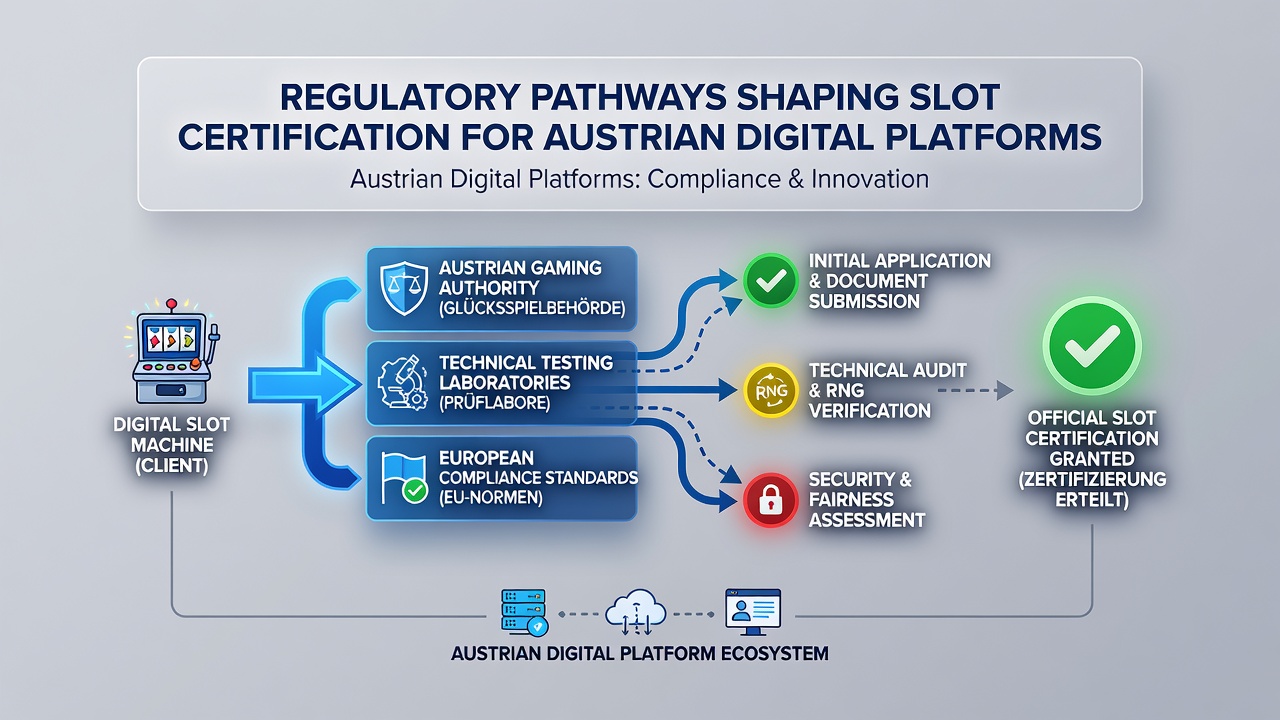
Operators seeking to introduce new slot titles follow a multi-stage sequence that begins with submission of detailed technical documentation to accredited testing facilities, and these labs then conduct simulations that verify compliance with Austria's predefined return-to-player thresholds and volatility parameters. Once initial evaluations conclude successfully, the results move to the ministry for final review and potential inclusion on the national approved games register, a step that typically occurs within a defined timeframe when all documentation aligns with regulatory expectations. External audits occur at regular intervals after launch, allowing authorities to confirm that live game behavior matches the certified specifications without deviation.
September 2026 marks the scheduled implementation of an updated digital reporting interface that will streamline submission of certification data between laboratories and the ministry, according to official announcements from the Federal Ministry of Finance. This change aims to reduce administrative delays while preserving the rigorous examination standards already in place.
Role of Independent Testing Bodies
Accredited laboratories operate under strict guidelines set by the ministry and must demonstrate ongoing competence through periodic reaccreditation procedures that evaluate their testing methodologies and equipment calibration. These facilities examine elements such as encryption protocols for player data, integration with payment systems, and the accuracy of displayed game rules, all of which form part of the comprehensive certification dossier submitted for each title. Industry reports indicate that several European laboratories hold current Austrian accreditation, providing operators with multiple options while ensuring consistent evaluation criteria across different providers.
Integration With Broader EU Standards
Austria's certification requirements align with select aspects of European Union directives on consumer protection and digital services, creating a regulatory environment where cross-border operators must reconcile national rules with wider obligations. Research conducted by the European Gaming and Betting Association highlights how member states maintain distinct technical standards even when broader principles overlap, and Austria continues to enforce its own slot-specific parameters alongside these shared frameworks. Observers note that this dual structure requires platforms to maintain separate compliance documentation for each jurisdiction in which they operate.
One study from the University of Vienna's gambling research group examined certification timelines across several EU countries and found that Austria's process emphasizes pre-launch verification more heavily than post-launch sampling alone. Such findings underscore the ministry's preference for front-loaded evaluation that identifies potential issues before players encounter them.
Conclusion
Regulatory pathways for slot certification in Austria continue to balance technological innovation with consumer safeguards through structured testing and ministerial approval. As the September 2026 digital reporting update takes effect, platforms and laboratories will adapt their workflows while the core requirements for fairness, transparency, and ongoing compliance remain central to the system. Data from official sources shows sustained activity in this area, indicating that certification will stay a fundamental component of Austria's regulated digital gaming landscape.